Manager performance directly shapes customer experience because they set the cultural tone, directly interact with customers, develop employees, streamline processes, and monitor performance metrics.
Competent managers empower employees to make decisions that improve customer interactions.
Organizations should focus on providing managers with the necessary skills and perspective through leadership development programs to drive a service-first approach.
Better managers lead to better employees, and better employees naturally improve customer experience. It sounds simple in theory, almost obvious, but in reality the connection is much more complex.
Take the definition of manager performance, for example, which is subjective to a company’s mission. One organization may measure success by profits, while another emphasizes efficiency or innovation. Yet, a manager focusing too heavily on the bottom line is a sure way to antagonize customers.
This is where manager performance goals play an important role. Competence should be measured in how leaders influence their employees to show up in their roles and provide services because these nuances directly shape the customer experience.
Understanding this link is essential for any company looking to implement customer experience best practices that foster loyal customers.
How Managers Influence Customer Experience
Managers are the pulse of how a company interacts with its customers and improves their experience, and this can be seen in the way they set expectations and improve processes that affect customers, among other ways.
Let’s break down how their influence plays out.
1. Setting the Tone and Culture
A customer’s experience starts long before a client walks through the door or visits your website. It starts with culture.
Managers are the ones who set that tone. If they communicate a clear vision of what great customer service looks like and back it up with consistent action, employees know what standard they’re aiming for. Without that clarity, the way they interact with the customer becomes inconsistent and reactive.
One of the most impactful ways they do this is through empowerment. A rigid system where employees have to escalate every little issue frustrates both staff and customers. But when managers trust their teams to make judgment calls, like offering a replacement product or resolving a billing dispute on the spot, customers walk away feeling valued.
Empowerment builds confidence in employees, and that confidence translates directly into smoother, more positive customer interactions.
In short, managers define the culture that either enables or hinders the ability to improve customer experience.
2. Direct Customer Interactions
Culture-setting is crucial, but words only go so far. Managers also influence customer experience through their own behavior, especially in how they engage directly with customers.
A manager who visibly prioritizes customer satisfaction, whether by stepping in to resolve a tricky complaint or even just modeling the right tone in conversations, sends a clear message on how to treat customers.
On the other hand, when customers see a manager personally responding to their concerns, it changes the dynamic. They will feel that their voice carries weight instead of feeling brushed off.
Employees notice it too. If their leader goes the extra mile to improve a customer’s experience, they’re more likely to follow suit. This kind of leading by example is more powerful than any training.
3. Employee Development and Engagement
Of course, no manager can personally interact with every customer. That’s why developing your employees is one of the most high-impact ways to influence the customer journey. Customers feel the difference immediately when staff are well-trained and motivated.
Training goes beyond the basics of how to handle a transaction. Soft skills like listening and empathizing enable the employee to respond effectively to customer requests or issues.
Engagement plays an equally important role in improving a customer’s experience. And, according to Gallup, managers account for 70% of the variance in employee engagement.
That’s a staggering statistic, but it makes sense. Managers set performance goals, give feedback, and recognize when someone on the team goes above and beyond. These actions directly impact morale.
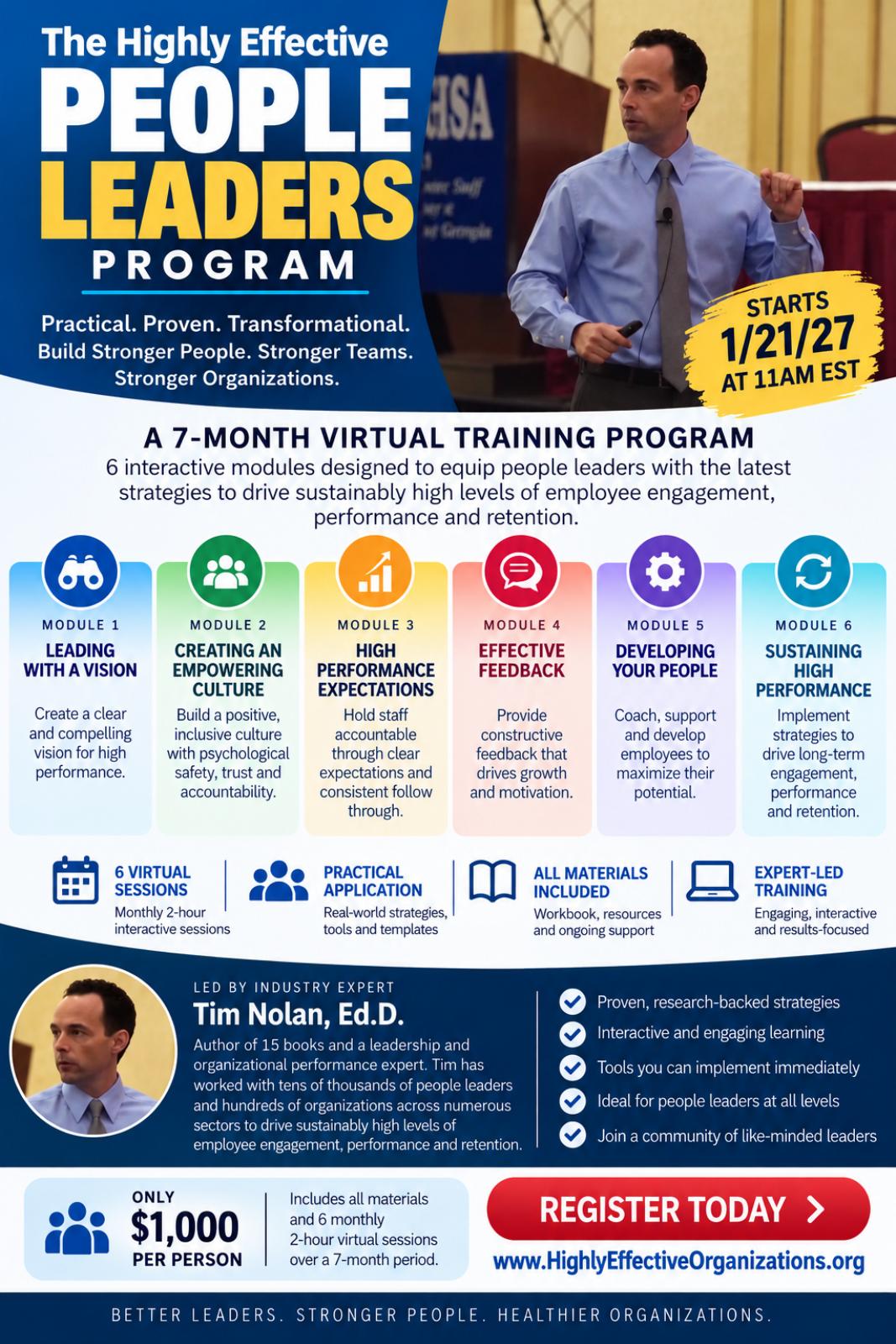
This is also where coaching comes into play. For example, Highly Effective Organizations’
(HEO) manager’s program and one-on-one coaching with employees ensure everyone feels invested in their own growth while staying aligned with company goals.
Ultimately, a motivated employee base is one of the most reliable customer experience best practices any business can adopt.
4. Process Improvement and Technology
Going beyond the day-to-day, managers bring a bird’s-eye view to improving the overall customer experience. They are not locked into every customer conversation, so they can spot patterns in complaints or inefficiencies.
Additionally, managers are responsible for analyzing feedback and looking at trends to identify pain points and come up with solutions that improve the customer journey in the long term. This could be anything from introducing new technology to updating workflows to be more efficient.
They also make sure new initiatives or changes are rolled out smoothly so service isn’t disrupted.
5. Measuring and Monitoring
Finally, what isn’t measured can’t be improved. Thus, an important manager performance goal should be to establish systems that capture customer input, such as surveys and direct outreach.
Tracking metrics like Net Promoter Score (NPS), Customer Effort Score (CES), and retention rates enables them to see what’s working. Monitoring these data points also helps managers fine-tune strategies to improve customer experience.
Practical Takeaways for Organizations
Customer experience best practices can only be applied with strong leadership driving a service-first approach.
As such, organizations should invest in giving managers the skills and perspective to directly shape customer outcomes. Initiatives like leadership development programs, paired with practical tools like easy-to-apply workbooks, ensure lessons move from theory to daily practice. At HEO, our customized leadership development solutions are designed to elevate leaders’ performance and, in turn, significantly improve your customers’ experiences. Book a call with us today to learn how we can help your managers become the driving force behind customer loyalty and long-term growth.
Organizations running successful leadership development programs enjoy higher profits per employee.
A healthy talent bench slices vacancy backfill time nearly in half, keeping launch dates from wobbling.
Robust coaching cultures boost engagement and lower turnover.
The effective leadership development programs in companies blend evidence-based content, practice reps, and measurable ROI.
Thriving cultures grow, sometimes inch by inch, because leaders keep watering trust, clarity, and accountability. But most supervisors walk into that role with solid technical chops and only a rough sketch of “people skills.” The result? Extra meetings, missed cues, and talent drifting to greener pastures. This is the key to success in business, and smart companies catch this early on; they don’t wait around. They invest in real training, the kind that actually sticks. When it works? You start seeing the big-picture stuff actually happening on a Tuesday morning. People seem happier with fewer folks heading for the door.
ROI: A Chief Benefit of Leadership Development Programs
A 2023 Harvard Business Publishing report found that organizations investing in leadership development (especially empathy-based and hybrid leadership skills) saw notable gains in employee engagement, resilience, and adaptability. This translates to hard-dollar wins.
Why the lift?
Getting things done better: This is a key to business success. When your managers learn to coach instead of constantly putting out fires, you see less of that back-and-forth revision nightmare.
Keeping good people around: Think about it; replacing someone can cost you anywhere from 1.5 to 2 times their salary. It’s simple math.
Risk mitigation: Decision-making workshops reduce compliance mistakes that trigger fines or brand damage.
Highly Effective Organizations’ own client data tell a similar story on effective leadership development programs. We had a regional credit union send supervisors through our Highly Effective Managers Program. A year down the road, they’d cut their loan processing time in half.
Another Key to Success in Business: Succession Planning
Leadership gaps never happen when you’re ready for them. Someone gets a better offer, retires, or takes family leave. And it’s always right in the middle of your busiest quarter. Then everything downstream starts feeling it. One of the benefits of leadership development programs is that they function like an internal talent insurance policy.
What it looks like in Practice
Bench Depth Charts: We map future openings against emerging talent so nobody scrambles when a VP gives notice.
Mini-Projects: Stretch-assignments under mentors let candidates prove readiness without risking mission-critical work. Developing experience in a controlled way is key to business success.
Case Vignette: Faced with a wave of leadership retirements, some large healthcare systems have implemented structured succession tracks combined with leadership development training. This allowed for internal hires, cutting down significantly on recruitment costs and, in some cases, cutting onboarding time almost in half. Do we have your attention? Schedule a demonstration with us today to see how we can keep you ready for anything.
Adaptability in Volatile Markets
Markets swing. Supply chains hiccup. New tech lands overnight. Organizations anchored to outdated management playbooks bend, then snap. Many new managers don’t receive formal training before taking their new role. Adaptive and effective leadership programs teach managers to scan signals early, test small, and iterate fast.
Agility-Building Program Elements Key to Success in Business:
Scenario drills: Leaders design responses to hypothetical disruptions such as a cyber breach or supplier collapse, and then refine plans together.
Cross-functional forums: Monthly roundtables can break silos, allowing, for instance, marketing to hear ops pain points in real time.
McKinsey’s 2021 agility report notes that companies that embrace enterprise agility achieve up to 30% improvements in speed, innovation, and customer satisfaction compared to industry peers.
What Defines a Top-Tier Program?
Not all “leadership” development programs deliver benefits. The best leadership development programs share three signatures:
Evidence-backed curriculum: Content rooted in peer-reviewed research and battle-tested tools is key to business success; exactly how HEO structures modules around Dr. Tim Nolan’s 13-book framework.
Make it hands-on: Role-playing exercises, live-coaching sessions, and trying things out immediately beat sitting through another PowerPoint marathon any day.
Track what matters, then tweak: Before-and-after assessments, quick team check-ins, actual business metrics. Programs that won’t show you the numbers? They probably don’t have good ones.
Common Objections and Straight Answers
“We’re too busy” – Short, spaced micro sessions often beat marathon retreats. Leaders apply content Tuesday morning, not “someday.”
“Budgets are tight” – Calculate turnover cost, re-work hours, and lost client renewals. Quality programs, the kind that are key to success in business, usually pay for themselves fast.
“Our culture is unique” – Good. Effective leadership development programs are custom-tailored to target your vocabulary, values, and pressures.
Quick Checklist to Gauge Readiness
Engagement-scores falling or flat?
Key performers turning in notice within two years?
Strategy stalls in middle-management layers?
Customer experience scores drifting south?
If you ticked even one box, know that the benefits of leadership development programs are to address these issues.
Mini-Case:
A fintech startup doubled its headcount in 18 months. Growth was thrilling, but chaotic. Managers promoted for coding prowess suddenly juggled people and cross-department issues. They realized that leadership development was key to business success. After a round of 360s revealed trust gaps, they brought in HEO for an accelerated managers program plus individual coaching.
Results:
Support-ticket backlog cut almost 30%
Voluntary attrition among engineers dropped by half
Time-to-launch for new features shortened.
Leadership skills weren’t a perk; they were the lever that turned velocity into sustainable scale.
Final Thoughts
Markets don’t slow down for leaders to catch up; managers and executives must learn, unlearn, and relearn on a rolling basis. The organizations with the best leadership development programs in companies are the ones that out-innovate and thus outlast the field. That’s why these programs are key to success in business. Schedule a demonstration or book a call to see how HEO’s successful leadership development programs can help your business.